
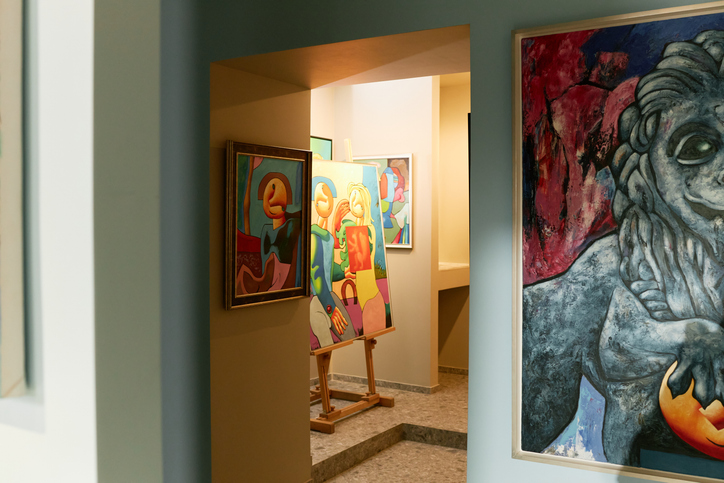
Starting an art collection is a rewarding and exciting pursuit, because it means immersing yourself in a subject, studying, exchanging ideas, and exploring every facet of it. The art world has a reputation for opacity, gatekeeping, and complexity. In reality, with the right approach, anyone with genuine interest and a modest budget can begin building a meaningful collection.
Step 1: Clarify Your Purpose
Before spending a euro, pound, or dollar, ask yourself: why do I want to collect art?
Common motivations:
- Aesthetic pleasure: You love art and want to live surrounded by it
- Cultural connection: You want to support artists and preserve culture
- Investment: You see art as an alternative asset class
- Legacy: You want to build something meaningful to pass on
Most successful collectors are driven by genuine passion, not primarily investment returns. The "buy what you love" maxim exists for good reason: if a work never appreciates, you still have something you cherish.
Step 2: Define Your Budget
Art is available at every price point. A meaningful, thoughtfully built collection can start with €500 or $1,000. Be honest with yourself about:
- Acquisition budget: How much to spend on works
- Carrying costs: Framing, storage, insurance, and maintenance
- Growth budget: How much you can add annually
Rule of thumb: Allocate 15-20% of your annual art budget for insurance and proper care.
Step 3: Educate Yourself
Spend significant time learning before significant spending. Effective approaches:
Visit Museums and Galleries
Spend time with great art. Attend gallery openings and art fairs. Develop your eye by exposure, not just theory.
Read Widely
- The $12 Million Stuffed Shark by Don Thompson (art market mechanics)
- Ways of Seeing by John Berger (visual literacy)
- Seven Days in the Art World by Sarah Thornton (market culture)
Follow the Market
Monitor auction results at Christie's, Sotheby's, Phillips, and smaller regional houses. Artsy and Invaluable publish results publicly. This builds invaluable price awareness.
Step 4: Find Your Focus
Generalist collections tend to lack coherence. Consider focusing on:
- A specific period (post-war photography, contemporary painting)
- A medium (works on paper, ceramics, prints)
- A geography (Latin American modernism, African contemporary art)
- A theme (portraits, landscape, abstraction)
Focus doesn't mean rigidity. The best collections evolve organically, but a guiding thread makes them more meaningful and often more valuable.
Step 5: Where to Buy
Commercial Galleries: The primary market for living artists. Build relationships with gallerists who share your interests. Gallery artists are typically well-supported by their galleries, which matters for secondary market values.
Art Fairs: Frieze, Art Basel, FIAC, and hundreds of regional fairs condense months of gallery visits into days. Efficient for building relationships and market awareness.
Auction Houses: Better for secondary market works with established price histories. Know that buyer's premiums (typically 25-26% of the hammer price) significantly affect actual cost.
Online Platforms: Artsy, Saatchi Art, and others have democratized access to emerging artists. Lower prices but require careful due diligence.
Step 6: Authentication and Due Diligence
Never buy significant works without proper due diligence:
- Research the artist: Gallery representation, exhibition history, bibliography
- Verify provenance: Who owned this work and when?
- Check for encumbrances: Has the work been stolen or disputed?
- Request condition reports: For auction purchases especially
- Seek expert opinion: For works above €5,000, consider an independent appraisal
AI tools like Objais can provide a useful starting point for valuation research, but always supplement with human expertise for significant purchases.
Step 7: Insurance from Day One
Many new collectors neglect insurance until something goes wrong. This is a costly mistake. Key points:
Your homeowners policy is almost certainly inadequate. Standard policies have low sub-limits for art and typically exclude:
- Accidental breakage
- Water damage
- Transit
Get specialist fine art insurance. Dedicated policies offer:
- Agreed-value coverage (no depreciation arguments at claim time)
- Worldwide transit coverage
- Broader perils including accidental damage
AI valuations as a starting point: Use Objais to get instant baseline valuations for your collection, then work with us to establish formal agreed values and contractual quotes.
Step 8: Proper Care and Storage
Art is a living thing. Protect it:
- Light: Avoid direct sunlight and UV exposure (use UV-filtering glass or acrylic)
- Humidity: Maintain 45-55% relative humidity; sudden changes cause damage
- Temperature: Stable 18-21°C (65-70°F)
- Handling: Always handle with clean cotton gloves; support works from underneath
- Documentation: Photograph every work, keep condition records
Building a Network
The art world runs on relationships. Build connections with:
- Gallery directors and artists
- Other collectors (collector groups and museum patron circles)
- Conservators, framers, and art handlers
- Your insurance specialist and appraiser
Over time, these relationships will bring opportunities, knowledge, and access that no amount of internet research can replicate.
Document and value your growing art collection with the Objais App. Our AI identifies works, estimates their value, and provides non-binding insurance estimates underwritten by partner insurers. Start free — no registration required.