
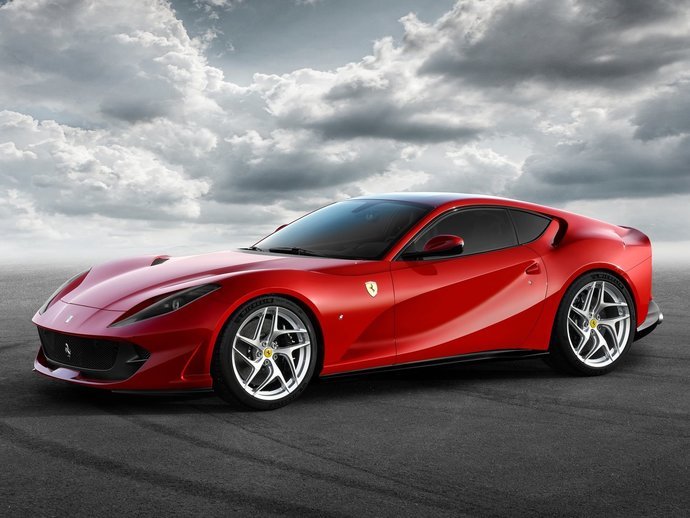
Short answer: annual supercar insurance premiums run between 0.8% and 6% of the vehicle's insured value per year, depending mainly on the country. A €250,000 supercar costs roughly €2,500–€7,500 a year to insure in Western Europe, $4,000–$8,000 in the United States, £4,000–£12,000 in the United Kingdom, and can exceed 5% of value in Brazil. The country you register the car in moves the premium more than the badge on the bonnet.
This page gives orders of magnitude across the main markets, the variables that move them, and the method to place a specific car inside the range. It is not a contract and not a quote: the binding figure always comes from an insurer's own underwriting decision.
The one ratio that travels: premium as a percentage of insured value
Absolute figures are useless across borders. Currencies differ, tax treatment differs, minimum liability limits differ. The only comparable unit is the premium-to-value ratio — annual premium divided by the insured value of the car.
Across every market we observe, that ratio sits between 0.8% and 6% per year for a supercar in comprehensive cover.
Two structural patterns hold almost everywhere:
The ratio falls as value rises. A €120,000 sports car is typically insured at a higher percentage than a €900,000 hypercar. Higher-value vehicles are driven less, stored better, and owned by drivers with longer claim-free records. Insurers price the owner as much as the object.
The ratio rises with theft exposure and repair-cost inflation. Markets with high vehicle theft rates or long parts lead times sit at the top of the band, regardless of how well the individual driver behaves.
Indicative ranges by market
| MARKET | Premium as % of value | Typical annual cost (~€250k car) | Dominant local factor |
|---|---|---|---|
| United Kingdom | 1% – 4%+ | £4,000 – £12,000 | Tracker mandatory; postcode weighting; hard age floor around 30 |
| United States | 1.5% – 3% | $4,000 – $8,000 | Liability limits; state variation; carrier ceilings on vehicle value |
| France | 1% – 3% | €2,500 – €7,000 | Mileage-capped contracts; collection regime after 30 years |
| Germany / Switzerland / Benelux | 0.8% – 2.5% | €2,000 – €6,000 | Vehicle class rating systems; low theft in most regions |
| Italy / Spain / Portugal | 1% – 3.5% | €2,500 – €8,000 | Wide regional spread within each country |
| United Arab Emirates | 1.5% – 4% | AED 40,000 – 100,000 | Agency repair clause; sports-car loading; young-driver surcharges |
| Brazil | 3% – 6%+ | R$ 60,000 – 130,000 | Theft and hijack exposure; limited specialist capacity |
| Singapore / Hong Kong | 1% – 3% | Local currency equivalent | Registration duties inflate insured value dramatically |
| Australia / New Zealand | 1% – 3% | AU$ 5,000 – 12,000 | Agreed-value market well established |
- Premium as % of value
- 1% – 4%+
- Typical annual cost (~€250k car)
- £4,000 – £12,000
- Dominant local factor
- Tracker mandatory; postcode weighting; hard age floor around 30
- Premium as % of value
- 1.5% – 3%
- Typical annual cost (~€250k car)
- $4,000 – $8,000
- Dominant local factor
- Liability limits; state variation; carrier ceilings on vehicle value
- Premium as % of value
- 1% – 3%
- Typical annual cost (~€250k car)
- €2,500 – €7,000
- Dominant local factor
- Mileage-capped contracts; collection regime after 30 years
- Premium as % of value
- 0.8% – 2.5%
- Typical annual cost (~€250k car)
- €2,000 – €6,000
- Dominant local factor
- Vehicle class rating systems; low theft in most regions
- Premium as % of value
- 1% – 3.5%
- Typical annual cost (~€250k car)
- €2,500 – €8,000
- Dominant local factor
- Wide regional spread within each country
- Premium as % of value
- 1.5% – 4%
- Typical annual cost (~€250k car)
- AED 40,000 – 100,000
- Dominant local factor
- Agency repair clause; sports-car loading; young-driver surcharges
- Premium as % of value
- 3% – 6%+
- Typical annual cost (~€250k car)
- R$ 60,000 – 130,000
- Dominant local factor
- Theft and hijack exposure; limited specialist capacity
- Premium as % of value
- 1% – 3%
- Typical annual cost (~€250k car)
- Local currency equivalent
- Dominant local factor
- Registration duties inflate insured value dramatically
- Premium as % of value
- 1% – 3%
- Typical annual cost (~€250k car)
- AU$ 5,000 – 12,000
- Dominant local factor
- Agreed-value market well established
These are observed market bands, not offers. Individual outcomes fall outside them regularly in both directions.
Why the country matters more than the car
This is the point most model-by-model guides miss.
Take one supercar valued at €250,000. In Zurich, garaged, driven 3,000 km a year by a 45-year-old with a clean record, it is a low-frequency, low-severity risk in a market with strong theft recovery. In São Paulo, the same car in the same conditions carries a theft-and-hijack exposure that no driving record can offset. The vehicle is identical. The premium can differ by a factor of four.
Three country-level forces explain most of the spread:
Theft and recovery rates. Where organised vehicle theft is common and recovery rare, comprehensive cover carries the full replacement cost as an expected loss, not a tail risk.
Parts logistics. A carbon panel shipped from Italy takes weeks in Europe and months in some markets. Long immobilisation drives up total claim cost through recovery, storage and courtesy-vehicle provisions.
Liability regime. Markets with uncapped bodily injury awards price third-party liability far higher than markets with statutory ceilings. This is invisible in the sticker price of the car and decisive in the premium.
The seven variables inside any market
- Insured value basis. Agreed value or market value — this changes both the price and the nature of what you are buying. See the glossary below.
- Annual mileage. The strongest single lever nearly everywhere. A contract capped at 3,000–5,000 km/year can price 30–40% below an uncapped one on the same car.
- Storage. Locked private garage, alarm, tracking device. Several markets make an approved tracker a condition of cover, not a discount. Without it, the risk is simply declined.
- Driver age and experience. Most specialist markets apply a floor around 30 years old with prior high-performance ownership. Below that, expect refusals rather than expensive offers.
- Location within the country. Dense urban postcodes carry material loadings. The gap between a capital city and a rural address on an identical profile is routinely 50% or more.
- Position in the household fleet. A supercar insured as a secondary vehicle alongside a daily driver prices better than one insured as sole transport, because the declared usage is credible.
- Track use. Not covered by road policies anywhere. Circuit days require separate cover, usually per event.
Agreed value vs market value: the global glossary
Agreed value — a figure fixed between owner and insurer before inception, based on an appraisal, and written into the policy. On a total loss, that figure is paid without depreciation and without a contested valuation.
Market value (also actual cash value, valeur vénale, valor de mercado) — the vehicle's resale value at the moment of the loss, assessed after the event by the insurer's appraiser.
Local terminology to recognise:
| MARKET | Term for agreed value | Term for market value |
|---|---|---|
| United Kingdom | Agreed value | Market value |
| United States | Agreed value / stated value | Actual cash value (ACV) |
| France | Valeur agréée | Valeur vénale |
| Portugal / Brazil | Valor determinado / capital fixo | Valor de mercado referenciado |
| Italy | Valore a nuovo / valore concordato | Valore commerciale |
| Germany | Wiederbeschaffungswert (vereinbart) | Zeitwert |
- Term for agreed value
- Agreed value
- Term for market value
- Market value
- Term for agreed value
- Agreed value / stated value
- Term for market value
- Actual cash value (ACV)
- Term for agreed value
- Valeur agréée
- Term for market value
- Valeur vénale
- Term for agreed value
- Valor determinado / capital fixo
- Term for market value
- Valor de mercado referenciado
- Term for agreed value
- Valore a nuovo / valore concordato
- Term for market value
- Valore commerciale
- Term for agreed value
- Wiederbeschaffungswert (vereinbart)
- Term for market value
- Zeitwert
On a car whose value is stable or rising, the difference is not academic. A vehicle appraised at €250,000 and settled at market value can produce a payout well below what the collector market recognises — and a long argument to get there.
Agreed value almost always comes with conditions: leisure use only, capped mileage, secure storage. Re-appraisal every two to three years is standard practice, because a value fixed in 2020 on a market that has moved since is a loss you have already agreed to.
Frequently asked questions
How much does supercar insurance cost per year?
Is supercar insurance cheaper in some countries than others?
Does a more expensive car always cost proportionally more to insure?
Can a supercar be insured by the mile or kilometre?
Can a driver under 30 insure a supercar?
Are track days covered?
Is an appraisal necessary?
How can I get an estimate quickly, without a form?
About Objais
Objais is an insurance broker incorporated in Portugal, supervised by the ASF and GDPR-compliant. We are not an insurer.
Our role is to make available something that was not — the order of magnitude of a premium, before any process begins. Photograph an object, get a non-binding estimate in under 20 seconds, no account, no form. This step sits upstream of the entire existing journey: it comes before the quote, which remains the business of Objais itself or a licensed partner broker in the relevant country.
We operate across three ranges: Select (exceptional vehicles, watches, jewellery, art, yachts), Family (everyday vehicles and household assets) and Business (fleets and professional risks).
The bands on this page are built from our observation of the market and from the pricing data our brokerage activity gives us access to, across the territories where we route demand. They are published to be used, cited and checked.
Indicative pricing. Non-binding. Final premium subject to underwriting and acceptance.
You own the car. You want the order of magnitude before you speak to anyone.
Don't quote it. obj it.